A Steampunk Night Before Christmas
© 2009 Suzanne Lazear
‘Twas the night before Christmas and the whole ship was quiet,
Too quiet for the likes of this seasoned air pirate.
The airship was festooned with frippery and green,
With nary a brass polished surface to be seen.
Their stocking were hung by the crow’s nest with pride,
Along with homemade cookies and rum for Santa to imbibe.
I didn’t have the heart to tell the crew.
That Santa wouldn’t approve of what we do.
Sure, we stole from the rich, and gave to the needy.
But he’d probably think taking a cut was too greedy.
It didn’t matter that they had hearts of gold,
Only that it was stolen goods we bought and sold.
Suddenly portside there arose such a clatter,
That I grabbed my spyglass to see what was the matter.
The deck became filled with curious crew,
As I climbed the rigging for a better view.
The sky that had moments before been silent,
Had erupted with a commotion both grievous and violent.
The black ship portside was one that even we dread,
And it looked as if it were attacking a small red sled,
Driven by a fat guy and flying brown deer,
I polished the spyglass to ensure my vision was clear.
“Dread Pirate Fred’s attacking Santa, let’s help him, quick,”
Shouted my trusty first mate old Salty Nick.
What could I do but help out the sled,
“Come on, crew, let’s teach a lesson to Fred.”
I climbed down the rigging.
“There are cannons to load,
Christmas to save,
And pirates to goad.
Let’s kick up our speed,
And give up a fight.
Even we know
Robbing Santa just isn’t right.”
With a cheer, I manned the helm, going full speed ahead,
Nick loading our cannons to aim at the Dread Pirate Fred.
“Don’t worry Santa, help will arrive,
Salty Nick, man the cannons, prepare to take a dive.”
We flew through the air quickly, with all our might,
Fred’s crew had the sleigh on board, a terrible sight
Santa looked frightened, a gun to his head,
“Give me those presents,” growled the Dread Pirate Fred.
Even the reindeer had been rendered immobile,
By a few of Fred’s men in a black dirigible.
Santa shook his head, “If you take them, they will be missed.
Certainly, you all shall make my permanent naughty list.”
“I don’t care,” the pirate growled,
“We just want those gifts,” his crew avowed.
“Unhand those presents,” I called, dashing through the air
The cannons fired, aimed only to scare.
The reindeer bucked, trying to get free,
Fred sneered, “Captain Sno, you don’t scare me.”
Quickly, we secured Fred’s ship and dastardly crew,
But Fred still had Santa—there was only one thing to do.
Fred and I grappled across the deck, precariously,
Nick making sure Santa and the reindeer went free,
“You can’t rob Santa, it’s just not right,”
I yelled as I punched Fred when he put up a fight.
“Now, now, cease that,” Santa said,
Causing me to stop punching Dread Fred.
“Now Dread Pirate Fred, trying to steal presents in wrong,
but Captain Sno, punching him won’t stop him for long.
Christmas is about sharing and caring, not fighting and stealing,
and doing what’s right, not wheeling and dealing.”
Fred and I looked at each other, hanging our heads in shame.
The jolly old man had a good handle on our game.
Both crews made sure the gifts all went back
Into Santa’s giant red velvet sack.
Cook fed the reindeer carrots, and Santa cherry pie
I looked at the Dread Pirate Fred and gave a sigh.
“Why did you do that? That’s low even for you,
to attack Santa and take his presents on Christmas Eve, too.”
“Those presents would fetch prices that are sky high.”
But the look on Fred’s face told me that was a lie.
“There are better ways of getting a present from Santa’s sack,
then trapping the reindeer and staging an attack.”
“You’re one to talk,” Fred replied.
Nodding slowing, I looked at my crew, and again I sighed.
“I’m afraid, Santa, neither Fred nor I have been good this year,
but please, don’t forget our crew, they could use some cheer.
They don’t meant to be bad; they’re just following orders
They’re good men at heart, not drunkards and cavorters.”
Santa said, “Thank you captain, for rescuing me,
I think I my sleigh might hold an extra present or three.
You too,” he added to Dread Pirate Fred.
I shook my head. Was that what he actually said?
“Fred and his crew tried to steal your gifts to sell,
now you’re giving them presents as if all were well?”
Santa winked. “Now, Sno, remember what Christmas is all about.”
Getting in his sleigh, he gave his reindeer a shout.
“Just try to stay off the naughty list, the both of you, from now on.
Now, I have to be off, to get these delivered before dawn.”
Both crews looked up, as Santa took off.
“Merry Christmas, Santa,” my voice went soft.
With a wink of his eye, and a flick of his hand,
Presents flew out of his sleigh; onto the deck they did land.
“Thank you, Santa,” the crews did shout.
“There’s not one for me,” Dread Fred did pout.
“All I’ve ever wanted is a present from Santa, just one.”
I scoffed. “But not enough to stop having all your plundering fun.”
“Stop it you two,” Santa added with a call.
“But I didn’t forget you either, no, not at all.”
Two more presents floated down from the sky.
Turning mine over in my hands I looked up. “But why?”
Santa just smiled. “Just remember what I said.
And for once, Sno, can you stop plaguing Fred?”
With a hearty laugh, the sled flew through the sky,
Both crews waving, tears in their eyes.
“A present for me?” Fred’s eyes gleamed.
I knew deep down, he wasn’t as dreadful as he seemed.
Taking a box from my pocket, I said, “And there’s another.”
Giving it to him, I smiled. “Merry Christmas, brother.
I’m sorry I plague you, but it’s so much fun.
Let’s make next year a much better one.”
Nodding, Fred said, “For once, Sno, you’re right.
I think this should be the last time we fight.”
Santa sped by, doing one last turn.
“I hope there’s a lesson tonight you all learned.
Merry Christmas to you, and remember my lads,
no one says air pirates have to be bad.”
—
Suzanne Lazear writes steampunk tales for teens. INNOCENT DARKNESS, book one of The Aether Chronicles, book two, CHARMED VENGEANCE, and book three, FRAGILE DESTINY, are now available from Flux. Visit her personal blog for more adventures.

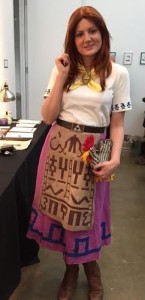
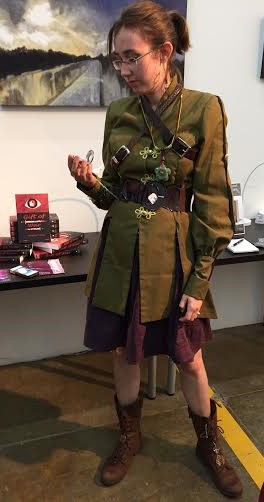 Bedrock City Comics here in Houston donated the prizes which were prop swords and action figurines for the awesome cosplay contest they had at the Lit-Con. The categories were for best over roll play, best Literary Costume, Best Fantasy Costume
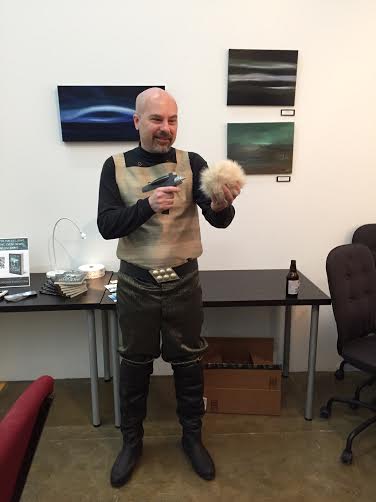 the Egyptians put on the sun in their religion and their buildings she asked if I
  knew about Sunpunk. I didn’t and needless to say I was so intrigued. It’s a perfect tie in to Egyptian Steampunk books or as I say SteamGyptianPunk. Have you ever thought of how much cogs look like the sun? Here is a brief post on sunpunk and
 If you have any comments at all especially on LIt-Cons or sunpunk please post them below.


 Especially for my friends who are in the cold snowy parts of the world, while I am here in Hawai’i suffering with a fan on to keep my room cool enough to sleep in… 😀
 What does a fireplace bring to a room in a novel. Do they gravitate toward it for warmth? Do they need the light to decipher a strange message? Perhaps they need to burn a document or piece of evidence?
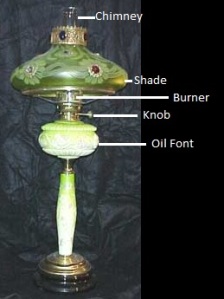 Kerosene gets it name from the Greek word Keros (meaning wax). Petroleum, related to the production of Kerosene, was discovered in Pennsylvania in the mid-1800s and helped fund a number of American industrial fortunes. Oil for the home lamps had a new source.
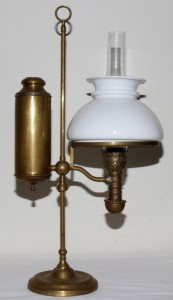 The Student Lamp (not used widely in America until late 1870s) was a special type of lamp. Rather than the static construction of most lamps, a student lamp was based off of a ‘stem’ and the actual light could be ‘swung out’ or positioned over a book or paper that needed illumination.
 Dickens On The Strand was earlier this month. It included a holiday parades of pirates, fellow Steampunkers, choirs of carolers, beggars, a host of other memorable Victorian characters and also the suffragettes. This picture of me next to H. G. Wells’ time machine as I’m wearing my Votes for Women sash is fitting. I went back in time on the strand as I marched with the Victorian suffragettes in the parade.
 Marching as a suffragette was a blast but the real suffragette movement was serious business and a long hard fight. Millicent Fawcett founded the National Union of Women’s Suffrage in 1897. The movement began with peaceful protest arguing that if women had to pay taxes they had the right to vote.
 In my search for things to do during the winter months, I encountered and interesting note to Victorian housekeepers. So for our Steampunk folks, here are some tips on how to reuse your newspapers… just like they did way back when..
 STEAMED!
